Blog Do You Need Crutches or a Knee Scooter After Surgery or Injury?
Last updated: February 14, 2026
Getting injured is frustrating. It slows you down. It disrupts your routine. And if the injury affects your foot or ankle, even simple tasks become difficult.
After surgery or a serious injury, your doctor may tell you to stay non-weight bearing. That means you cannot put pressure on your injured leg. To move safely during recovery, you will likely need crutches or a knee scooter.
But why are they necessary? And which one is better for you?
Let’s break it down.
Why Mobility Support Is Important During Recovery
When you injure your foot or ankle, your body needs time to heal. Walking too soon or putting weight on the injured area can delay healing, cause complications, or even lead to re-injury.
Mobility aids help you:
- Keep weight off the injured leg
- Move around safely
- Maintain independence
- Prevent falls
- Continue daily activities with less risk
Whether it’s a fracture, torn Achilles tendon, diabetic ulcer, sprained ankle, or post-surgery recovery, protecting the injured area is critical.
When Do You Need Crutches or a Knee Scooter?
You may need one of these mobility aids if you are:
- Recovering from foot or ankle surgery
- Healing from a fracture below the knee
- Treating severe sprains
- Managing diabetic foot wounds
- Waiting for a prosthesis after partial foot amputation
In most of these cases, your doctor will instruct you to avoid bearing weight on the affected leg. That’s where crutches or a knee scooter come in.
What Are Crutches?
Crutches are traditional mobility aids that transfer weight from your legs to your upper body. You support yourself using your arms, shoulders, and hands while keeping your injured leg off the ground.
Benefits of Crutches
- Affordable and widely available
- Suitable for many types of injuries (not just below the knee)
- Lightweight and easy to transport
- Work well in tight spaces and on stairs
Downsides of Crutches
- Require significant upper body strength
- Can cause shoulder, wrist, and underarm discomfort
- Harder to balance, especially long-term
- Hands are occupied while standing
Crutches are effective, but they can be physically demanding, especially during long recovery periods.
What Is a Knee Scooter?
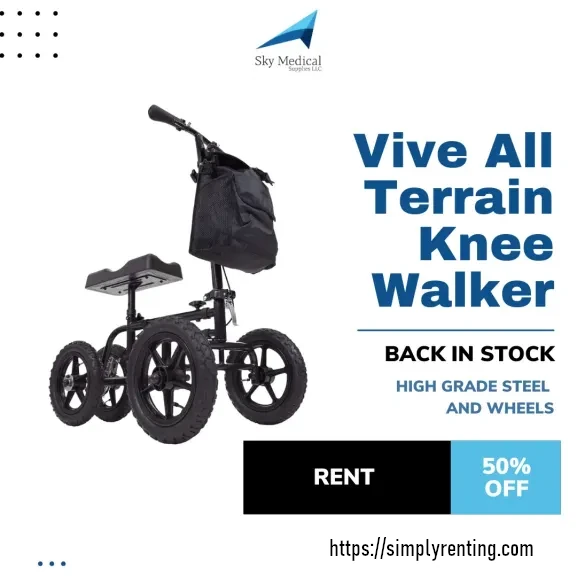
A knee scooter (also called a knee walker) is a wheeled mobility device designed for injuries below the knee. You rest your injured leg on a padded platform and push yourself forward using your good leg.
It functions similarly to a small scooter with handlebars and hand brakes.
Why Many Patients Prefer Knee Scooters
- More comfortable for long-term use
- Less strain on shoulders and wrists
- Easier balance and stability
- Faster and smoother movement
- Hands-free when standing still
Instead of relying on your arms, you use your stronger leg muscles to move. This reduces upper body fatigue and makes daily tasks easier.
Modern knee scooters are also:
- Foldable
- Easy to steer
- Equipped with brakes
- Available in all-terrain models for outdoor use
Advantages of Knee Scooters Over Crutches
Here’s why many patients choose a knee scooter during foot surgery recovery:
- You glide instead of hop.
- Minimal upper body effort required.
- Less risk of losing balance.
- You can carry items more easily.
- More comfortable for extended recovery periods.
For people who need to move around frequently — at home, work, or outdoors — a knee scooter can significantly improve mobility and comfort.
Disadvantages of Knee Scooters
However, they are not perfect for everyone.
- Only suitable for injuries below the knee
- Cannot be used on stairs
- Standard models struggle on rough terrain
- Usually more expensive than crutches
If your budget is tight or you only need support for a short period, crutches may be the more practical option. Renting a knee scooter is also a smart alternative for temporary recovery.
Which Option Is Right for You?
It depends on:
- Your doctor’s recommendation
- Type and location of injury
- Your upper body strength
- Your daily activity level
- Your home environment (stairs, narrow spaces, outdoor terrain)
For short-term recovery or when navigating stairs frequently, crutches may be better.
For longer recovery periods and better comfort, many patients prefer a knee scooter.
The most important thing is to follow your physician’s instructions and choose a device that keeps you safe and mobile.
A Modern Approach to Recovery
Crutches have been used for centuries. They are reliable and simple. But they transfer weight to the upper body, which can become uncomfortable over time.
Knee scooters were developed as a more comfortable alternative. By using wheels and a stable platform, they allow you to move longer distances with less effort.
For many patients, they provide a smoother and more practical recovery experience.
Final Thoughts
Recovering from surgery or injury doesn’t mean you have to stop living your life. The right mobility aid can help you stay active while protecting your healing foot or ankle.
Crutches are practical, affordable, and versatile. Knee scooters offer comfort, stability, and ease of movement — especially during longer recovery periods.
At Sky Medical Supplies, we provide both knee scooters and crutches based on your doctor’s prescription and personal needs. If you are in Denver, Colorado, Broomfield, Arvada, Aurora, or Northfield, contact us today to find the right solution for your recovery.
Your healing matters. And moving safely makes all the difference.
Related Posts
Get weekly articles in your inbox on the latest medical supply news, exclusive deals, and helpful health tips.