Blog What Is the Difference Between a Rollator and a Walker?
Last updated: February 12, 2026
If you have trouble walking long distances, struggle with balance, or are recovering from lower limb surgery, a mobility aid can make everyday life much easier. Simple tasks like moving around the house or going outside can start to feel exhausting. The right equipment restores independence, confidence, and comfort.
Among the most common mobility aids are walkers and rollators. While they may look similar at first glance, they serve different needs. Understanding the difference can help you choose the safest and most comfortable option.
What Is a Standard Walker?
A standard walker is a simple frame with four legs. Some models have no wheels at all, while others have two small wheels in the front. It does not have a seat.
To move forward, the user lifts the walker slightly and places it ahead before stepping. Because it stays firmly on the ground, it provides maximum stability.
Best for:
- People with significant balance issues
- Individuals recovering from surgery
- Users who need strong weight-bearing support
- Slower walkers who prioritize safety over speed
Walkers are often recommended for early recovery stages when stability is the main concern.
What Is a Rollator?
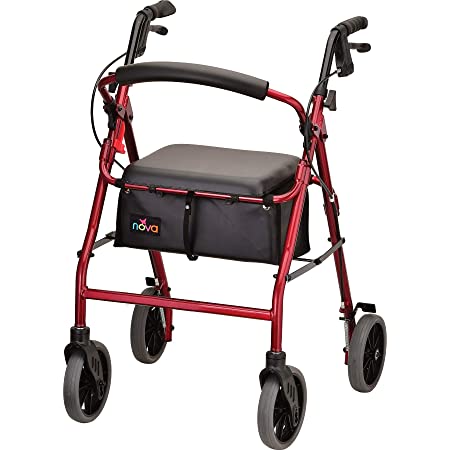
A rollator is a walker with wheels on all legs. It usually comes in three-wheel or four-wheel versions and includes hand brakes. Most four-wheel rollators also have a built-in seat and storage pouch.
Unlike a standard walker, you do not lift a rollator. You push it forward while walking. The brakes help control speed and lock the wheels when sitting.
Three-wheel rollator:
- Lighter and more compact
- Easier to maneuver in tight indoor spaces
- Typically does not include a seat
Four-wheel rollator:
- More stable than three-wheel models
- Includes a seat for resting
- Better for outdoor use
Rollators allow a more natural walking pace and are ideal for people who need moderate support but can maintain balance independently.
Key Differences Between a Rollator and a Walker
A standard walker typically has four legs, either without wheels or with two small front wheels. It does not include a seat, and it provides very high stability. Because the user must lift or move it step by step, walking speed is usually slower. Walkers also do not have hand brakes. They are best suited for individuals who need maximum support, especially during recovery or when balance is significantly limited.
A rollator, on the other hand, has three or four wheels and includes hand brakes for control. Most four-wheel models come with a built-in seat, allowing users to rest whenever needed. Rollators allow for a smoother and faster walking pace compared to standard walkers. While they provide moderate stability rather than maximum support, they are ideal for more active users who need light to moderate assistance while staying mobile and independent.
In simple terms, a walker focuses on stability and safety, while a rollator offers greater mobility and convenience.
What About an Upright Walker (Upwalker)?
 An upright walker (often called an Upwalker) is a type of rollator designed to support the forearms instead of just the hands. It allows the user to stand more upright instead of leaning forward.
Benefits of an upright walker:
- Encourages better posture
- Reduces strain on wrists and hands
- Helps reduce neck and back discomfort
- Allows users to look forward while walking
It is best suited for individuals who have decent balance but experience discomfort bending forward on a traditional rollator.
Which One Should You Choose?
Choosing the right mobility aid depends on your strength, balance, and daily lifestyle.
Consider Your Stability
If you feel unsteady or need to put significant weight on the device, a standard walker may be safer.
If you can walk steadily but need support and rest breaks, a rollator may be more practical.
Consider Your Strength
Both devices require arm strength. Rollators require enough control to operate hand brakes safely.
Consider Where You’ll Use It
- Indoors with tight spaces → Three-wheel rollator
- Outdoor walks and longer distances → Four-wheel rollator
- Early post-surgery recovery → Standard walker
If balance is severely limited, a wheelchair may be a better option.
It’s always wise to consult your doctor or physical therapist before making a final decision.
Regain Your Independence
Mobility challenges affect more than just physical movement. They can impact confidence, mood, and independence. The right mobility aid restores freedom and makes everyday life manageable again.
If you are in the Denver area and need to rent or purchase a walker, rollator, or upright walker, Sky Medical Supplies proudly serves Denver and surrounding communities including Castle Rock, Highlands Ranch, Parker, Aurora, Boulder, Lakewood, and more.
Our team can help you choose the right option based on your specific needs.
Related Posts
Get weekly articles in your inbox on the latest medical supply news, exclusive deals, and helpful health tips.