Blog Raising the Standard: A Guide to Raised Toilet Seats
Last updated: February 20, 2026
Using the bathroom should feel safe and comfortable. But for many seniors, individuals recovering from surgery, or anyone with limited mobility, sitting down and standing up from a standard toilet can be difficult—and sometimes dangerous.
Raised toilet seats are a simple yet highly effective solution. By increasing the height of your existing toilet, they reduce strain on the knees and hips, improve stability, and help prevent falls. In this guide, we’ll walk through why raised toilet seats matter, how to choose the right one, how to install it properly, and how to maintain it for long-term use.
Why Raised Toilet Seats Matter
Bathroom-related falls are more common than most people realize. According to general fall prevention guidelines, the bathroom is one of the highest-risk areas in the home due to slippery surfaces and frequent transitions between sitting and standing.
A raised toilet seat reduces that risk by elevating the seating position, typically by 2 to 6 inches. That small adjustment can make a significant difference.
1. Improved Safety
Standing up from a low toilet requires strength and balance. For individuals with arthritis, hip or knee pain, recent joint replacement surgery, or general weakness, that movement can increase the risk of falling. A raised seat shortens the distance needed to sit or stand, making the process smoother and safer.
2. Reduced Joint Strain
Lower seating forces deeper bending at the hips and knees. Elevated toilet seats help maintain a more natural posture, reducing stress on joints—especially important after hip replacement surgery when bending restrictions may apply.
3. Greater Independence
For many users, a raised toilet seat restores confidence. Being able to use the bathroom independently improves dignity and quality of life.
Who Should Use a Raised Toilet Seat?
Raised toilet seats are commonly recommended for:
- Seniors with limited mobility
- Individuals recovering from hip, knee, or back surgery
- People with arthritis or joint pain
- Patients with muscle weakness or balance issues
- Caregivers assisting loved ones at home
They are often used temporarily during recovery, but many people choose to keep them long-term for comfort and safety.
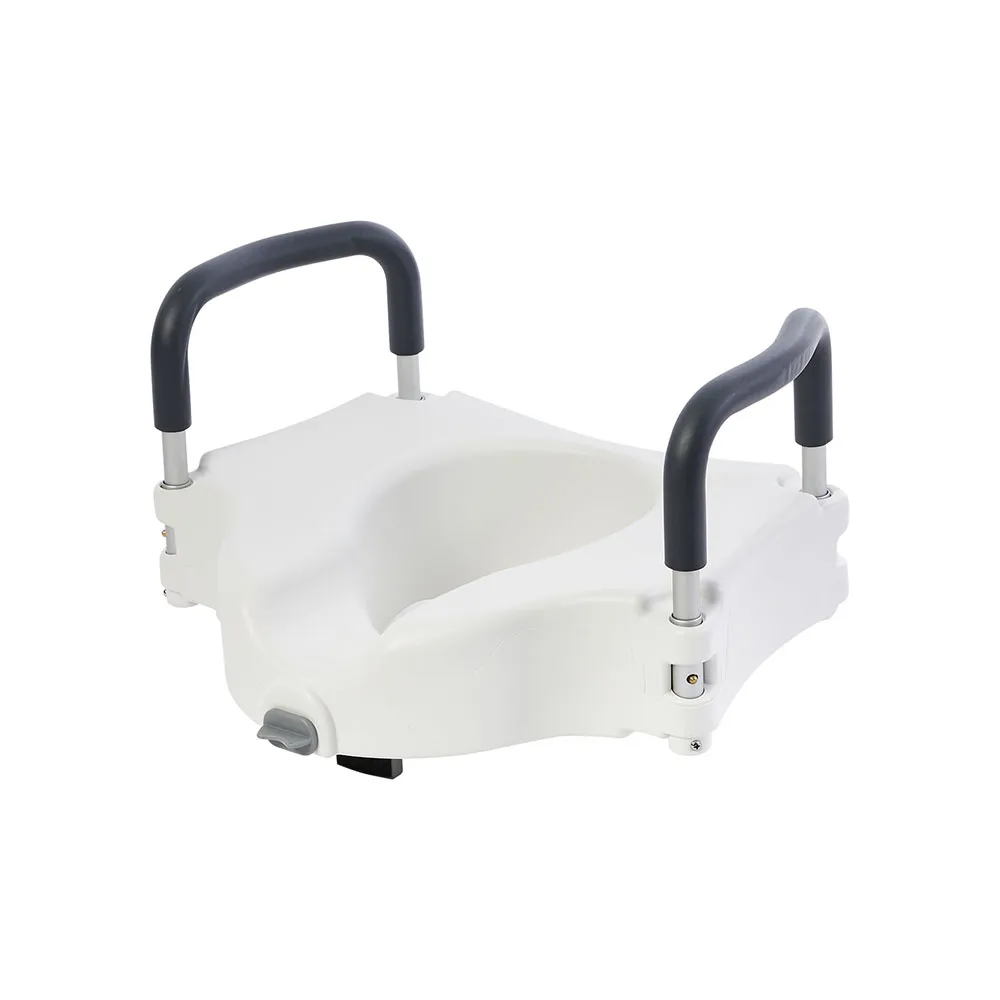
Types of Raised Toilet Seats
Not all raised toilet seats are the same. Choosing the right one depends on your needs, comfort level, and bathroom setup.
Raised Toilet Seat with Handles
Models with integrated handles provide additional support when sitting down or standing up. These are ideal for users who need extra stability but may not have grab bars installed in the bathroom.
Handles also give caregivers something secure to assist with transfers.
Locking Raised Toilet Seats
Locking mechanisms secure the seat firmly to the toilet bowl. This type is more stable than simple clamp-on versions and is recommended for individuals who require consistent support.
Padded vs. Hard Plastic Seats
Hard plastic seats are lightweight, easy to clean, and highly durable. Padded seats offer additional comfort, which may benefit users who sit for longer periods. However, padded surfaces may require more attentive cleaning.
Elevated Toilet Frames
These are standalone frames placed around the toilet, providing armrests without attaching directly to the seat. They are suitable when you don’t want to modify the toilet itself.
How to Choose the Right Raised Toilet Seat
Selecting the right model involves more than just picking a height.
Height
Most raised toilet seats add between 2 and 6 inches. The ideal height allows your knees to remain slightly lower than your hips when seated. If you’re unsure, consult a healthcare professional or measure the distance that feels most comfortable when sitting and standing.
Weight Capacity
Check the weight limit before purchasing. Standard models often support 250–300 lbs, while heavy-duty options can accommodate 400–500 lbs.
Fit and Compatibility
Ensure the seat fits your toilet shape—standard round or elongated. An improper fit can cause instability.
Attachment Style
For users with significant mobility challenges, locking seats or models with handles offer greater security than basic clamp-on styles.
Ease of Cleaning
Smooth surfaces without crevices are easier to sanitize. This is particularly important for long-term use.
How to Install a Raised Toilet Seat
Installation is usually straightforward and requires minimal tools.
- Remove the existing toilet seat if required (some models install directly over it).
- Position the raised seat securely on the bowl.
- Tighten the locking clamps or bolts according to manufacturer instructions.
- Test stability before full use.
If you choose a model with handles, make sure all side supports are tightened properly. The seat should not shift or wobble when weight is applied.
Most installations take less than 15 minutes.
Maintenance and Cleaning Tips
Keeping your raised toilet seat clean is essential for hygiene and longevity.
Wipe it down regularly with warm water and a mild disinfectant. Avoid harsh chemicals that may degrade plastic or padded surfaces. For models with handles, clean around connection points where dirt can accumulate.
Inspect the locking mechanism occasionally to ensure it remains tight and secure. Over time, repeated use may require minor adjustments.
Additional Bathroom Safety Considerations
While a raised toilet seat significantly improves safety, combining it with other bathroom aids can further reduce fall risks. Grab bars, non-slip bath mats, and shower chairs provide additional stability.
A comprehensive bathroom safety setup creates a more secure environment for recovery and aging in place.
Final Thoughts
A raised toilet seat may seem like a small addition, but it can make a major difference in comfort, safety, and independence. Whether you’re recovering from surgery, managing joint pain, or supporting a loved one, choosing the right model can transform a daily routine into a safer and more manageable experience.
When selecting a raised toilet seat, focus on stability, proper height, weight capacity, and ease of cleaning. With the right choice and proper installation, you can raise the standard of bathroom safety—literally and practically.
Related Posts
Get weekly articles in your inbox on the latest medical supply news, exclusive deals, and helpful health tips.